What cultural influences impacted the audience?
During that time, the African American, Latino, and LGBTQ+ groups were often excluded from mainstream society, especially in the wake of events like the Stonewall Riots, second wave of the Women’s Rights Movement, and the Civil Rights Movement. Going to underground venues gave these groups a space to feel accepted, express their identities, and build community through shared experience (music and dance).
Disco evolved out of jazz music, gradually incorporating electronic elements until it emerged as its own genre. While the commercial disco boom of 1978–79 focused on a predominantly white, heterosexual, and a middle‑class audience, the genre itself was born in underground house and loft parties. In these spaces, DJs blended soul, funk, and Latin American music to create a sound that reflected the cultural traditions and lived experiences of marginalized groups.
African Americans, Latinos, and the LGBTQ community played a major role in influencing the style of disco music and dancing.
African American Influence
If you are someone who has already listened to disco music or might be interested after reading, you will notice a lot of jazz influence. The music is very high pitched, often involving instruments such as saxophones or trumpets, alongside electronic backgrounds.
Disco music contains a lot of influence from African American Jazz artists like Max Roach. His music was fast-paced and gave DJ’s the opportunity to change up the rhythm of the dance floor (using turntables and vinyl albums). Additionally, there were several electronic features of disco found on vinyl’s and instruments. A few of those being lush strings, electronic piano, guitar, etc..
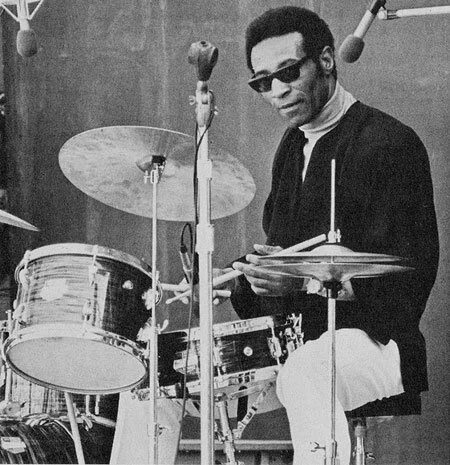
Max Roach (n.d.)
Max Roach’s Drum Solo (YouTube, 2024)
Latino Influence
Cubans and Puerto Ricans made up a big part of New York City’s disco scene, and their influence showed up strongly in the music. Disco’s steady four-on-the-floor beat was inspired by Latin rhythms like merengue, rumba, samba, and cha-cha-cha, and Latino dancers also brought back partnered dancing by mixing 1950s rock and roll swing with salsa elements.
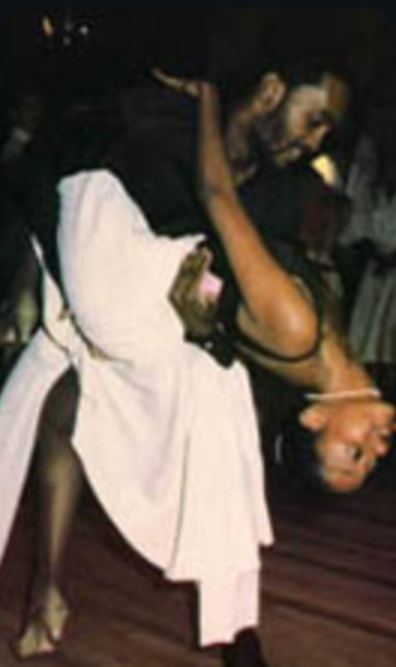
“Latinized Rock and Roll swing” (2019)
Skip to 2:30 (YouTube, 2013)
By the early 1980s, disco began to fade in popularity due to its growing commercialization, but also as a result of rising racism and homophobia directed at disco music and club culture.
After a few years, it became mainstream as disco was associated with a cultural movement of music, dance, fashion, and style. However, it also became commercialized as white culture after John Travolta’s “Saturday Night Fever”.
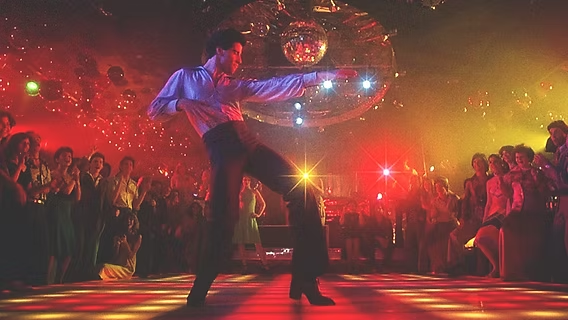
“Saturday Night Fever” (1977)
The history of disco in New York City is extremely crucial to recognizing the marginalized communities who played a significant role in its popularity. By staying uninformed about the history aspect and disco’s development, we give away the credit of its creation to the white majority, who joined the disco culture after it was already so significant.

This entry is licensed under a Creative Commons Attribution-NonCommercial-ShareAlike 4.0 International license.

